Launch offer — valid today only

📄 Digital book in PDF · read it on your phone or print it

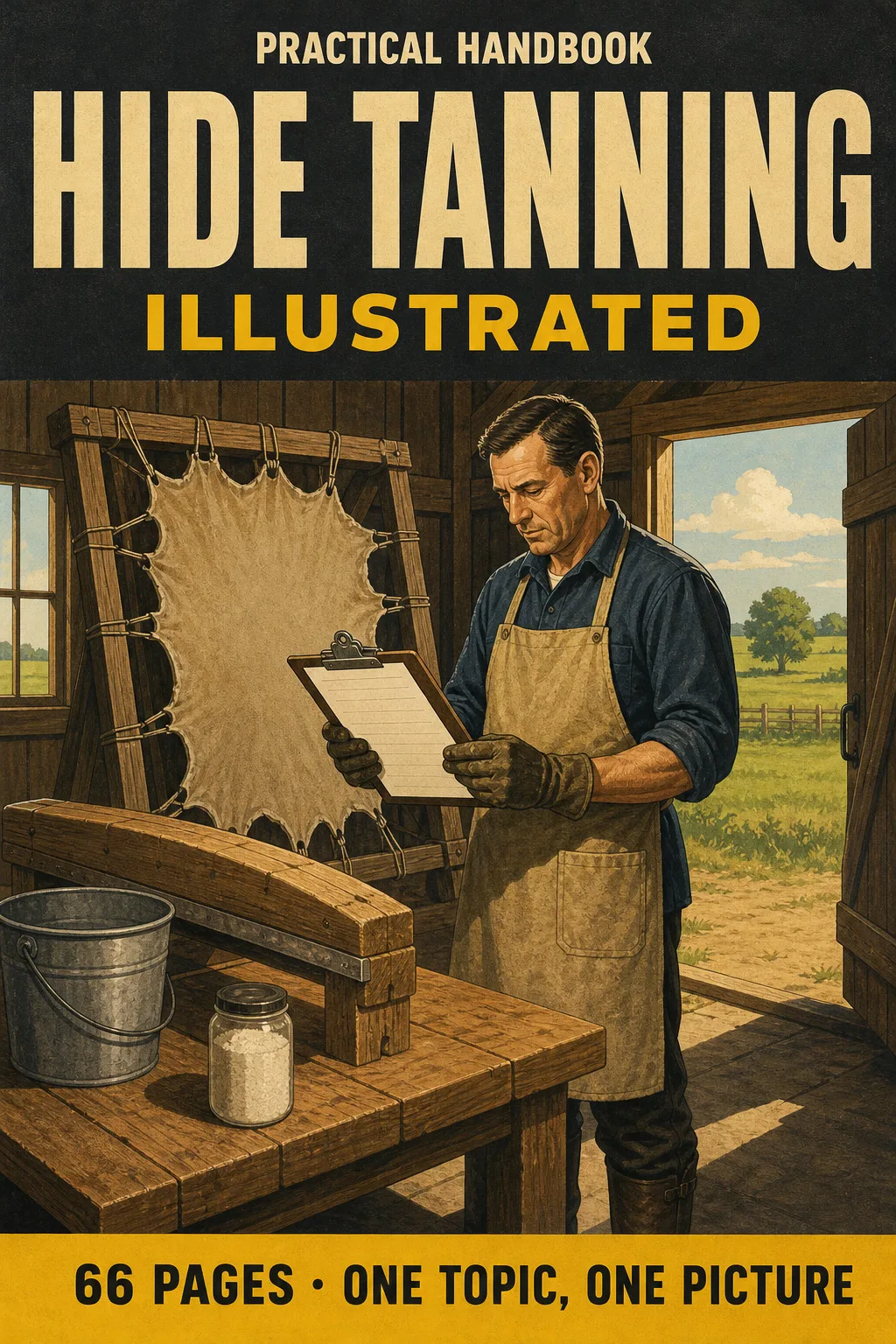
Deer Hide Tanning, From Skinning to Smoke, in Drawings One Stage on Every Page

Skinning, salting, fleshing, tanning, stretching and smoking, in the same order every time, hair-on or buckskin. One page per step: the drawing first, then the salt amounts, times and temperatures in a box. 66 illustrated pages.

START TANNING THIS WAY

🔒 Secure checkout · PDF by email · 30-day guarantee

Every topic, its own pageEach stage drawn, with the explanation right beside it
66 illustrated pages9 parts, from the eight-stage map to the season checklist
Up-to-date sourcesRules checked against your state wildlife agency, product labels and SDS
PDF by emailFormat

Look Inside the Book

Every page has one big drawing and a box with the numbers and steps you need to know:

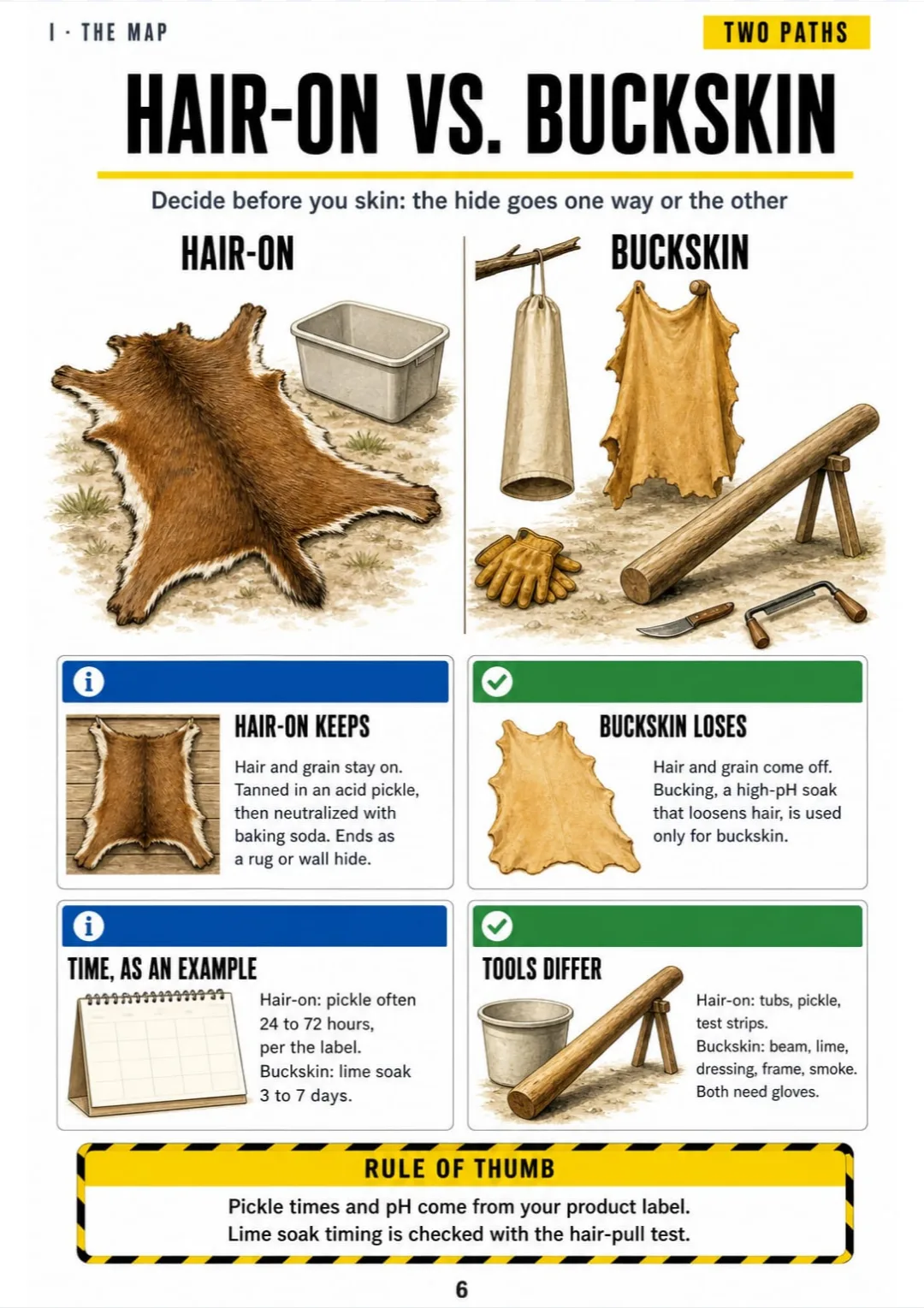
Hair-on keeps hair and grain; buckskin loses both and gets smoked
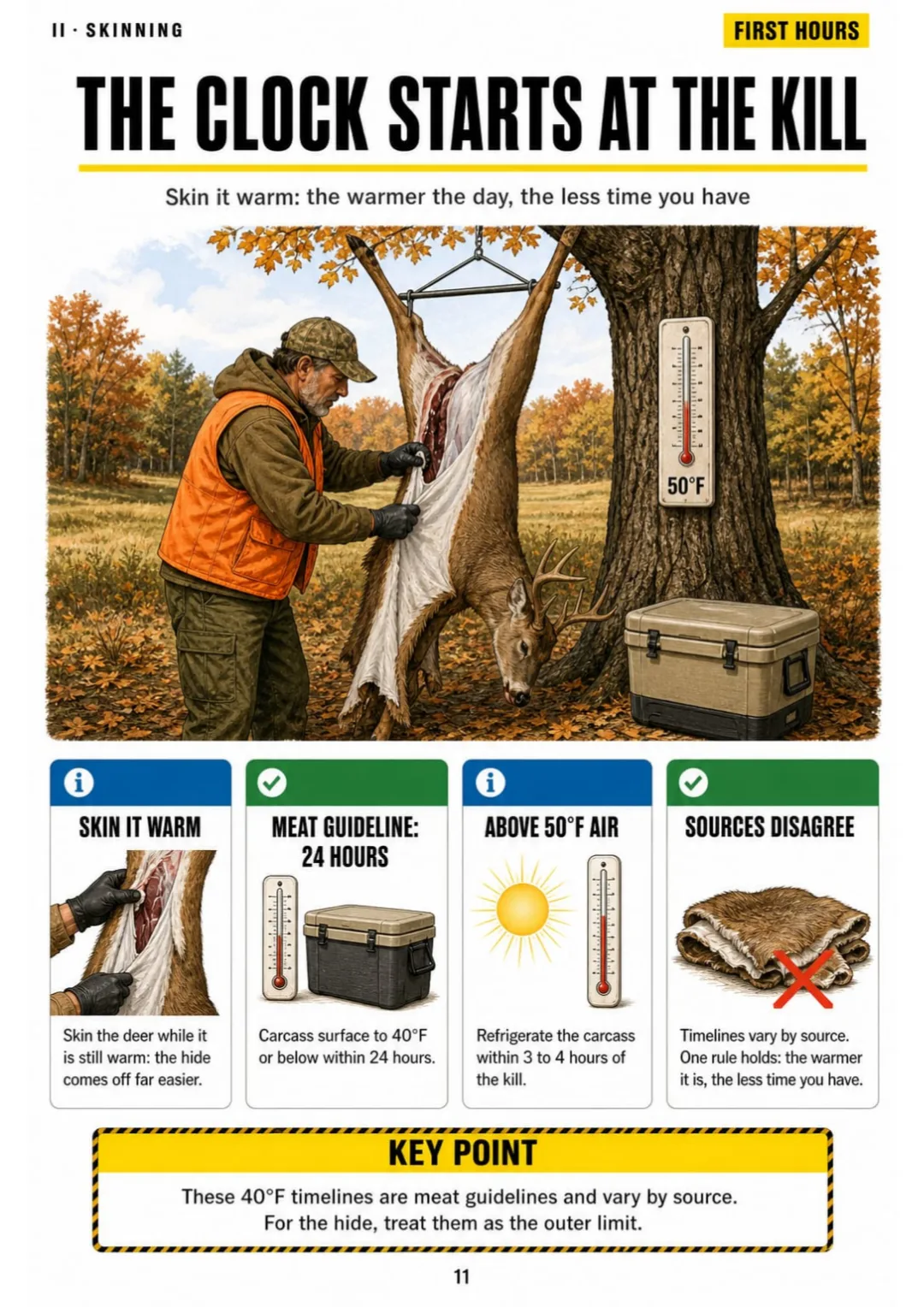
Skin it warm · carcass to 40°F within 24 h · above 50°F, 3–4 h
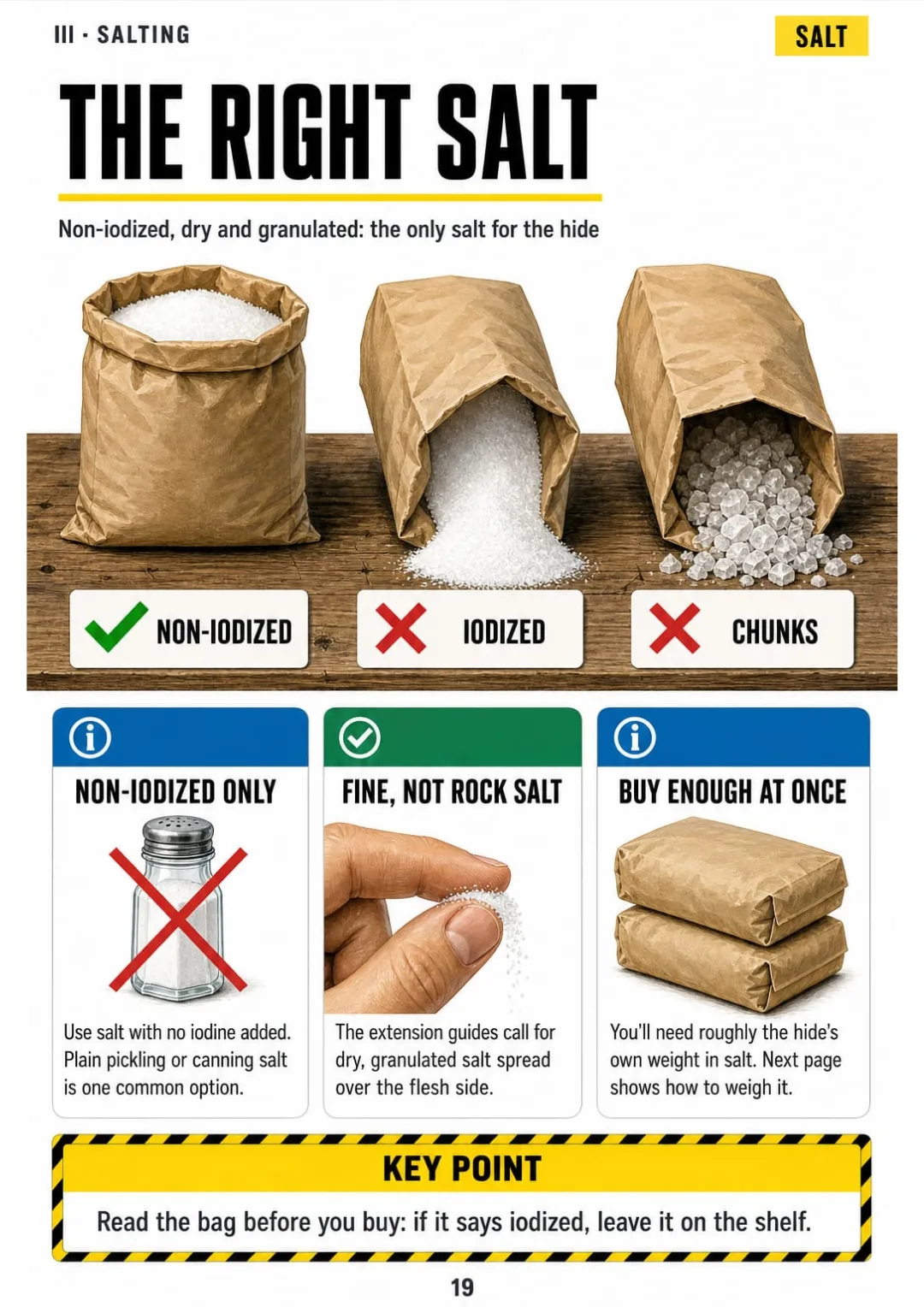
Non-iodized, dry, granulated salt: the bag to buy before the hunt
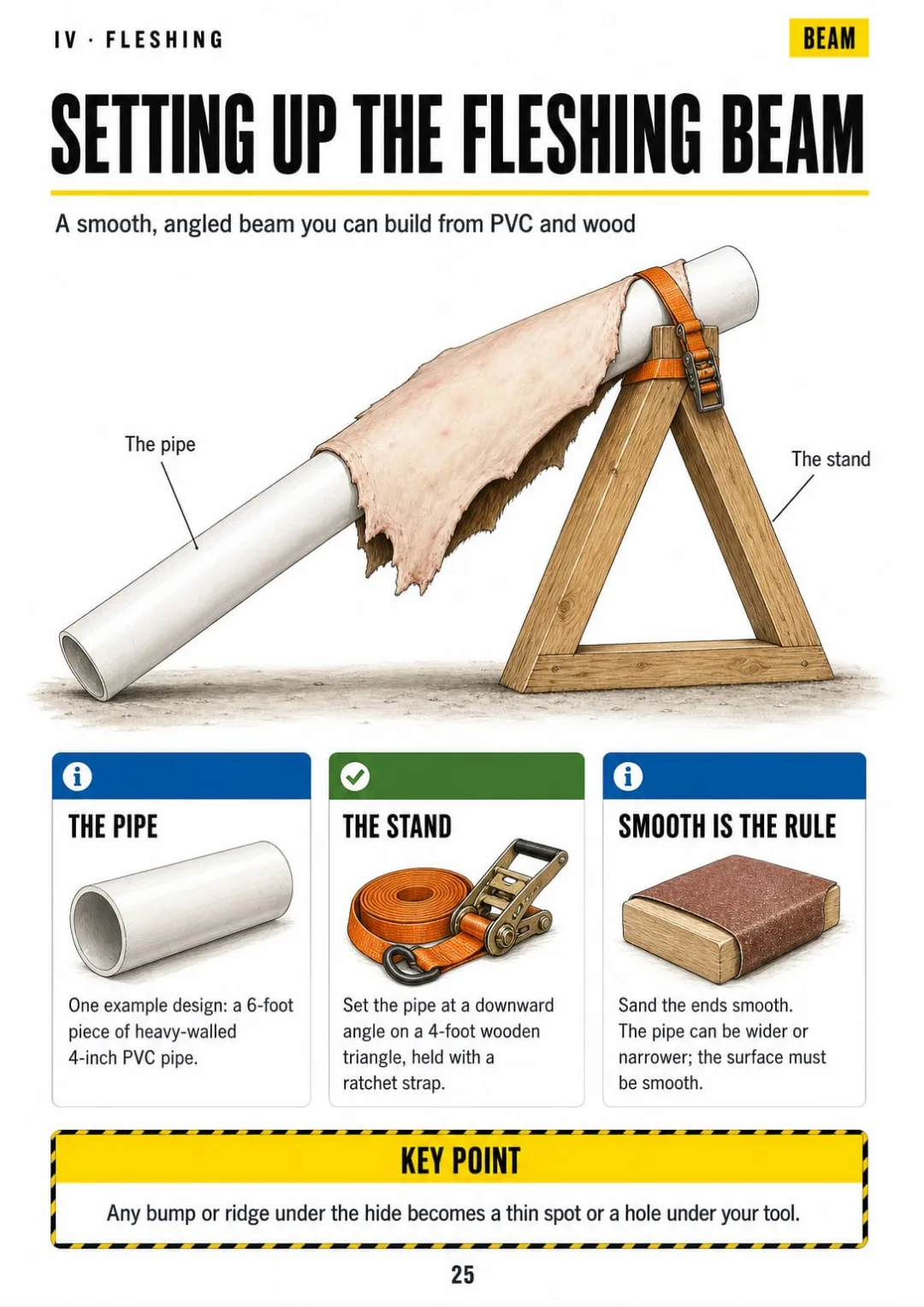
6-foot, 4-inch PVC pipe on a 4-foot wooden triangle, ends sanded smooth.
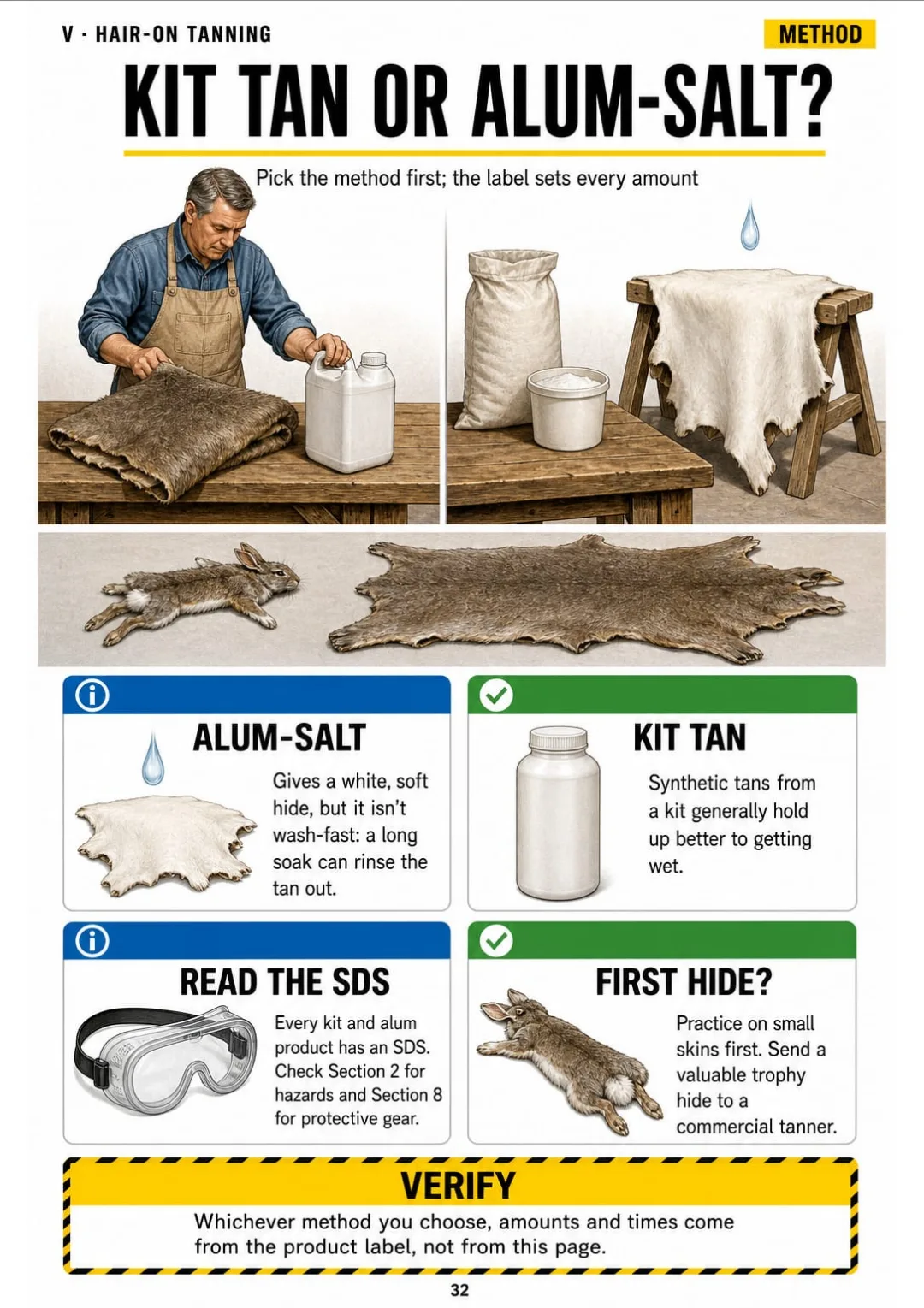
Alum gives a white hide that isn't wash-fast; kit tans hold up better
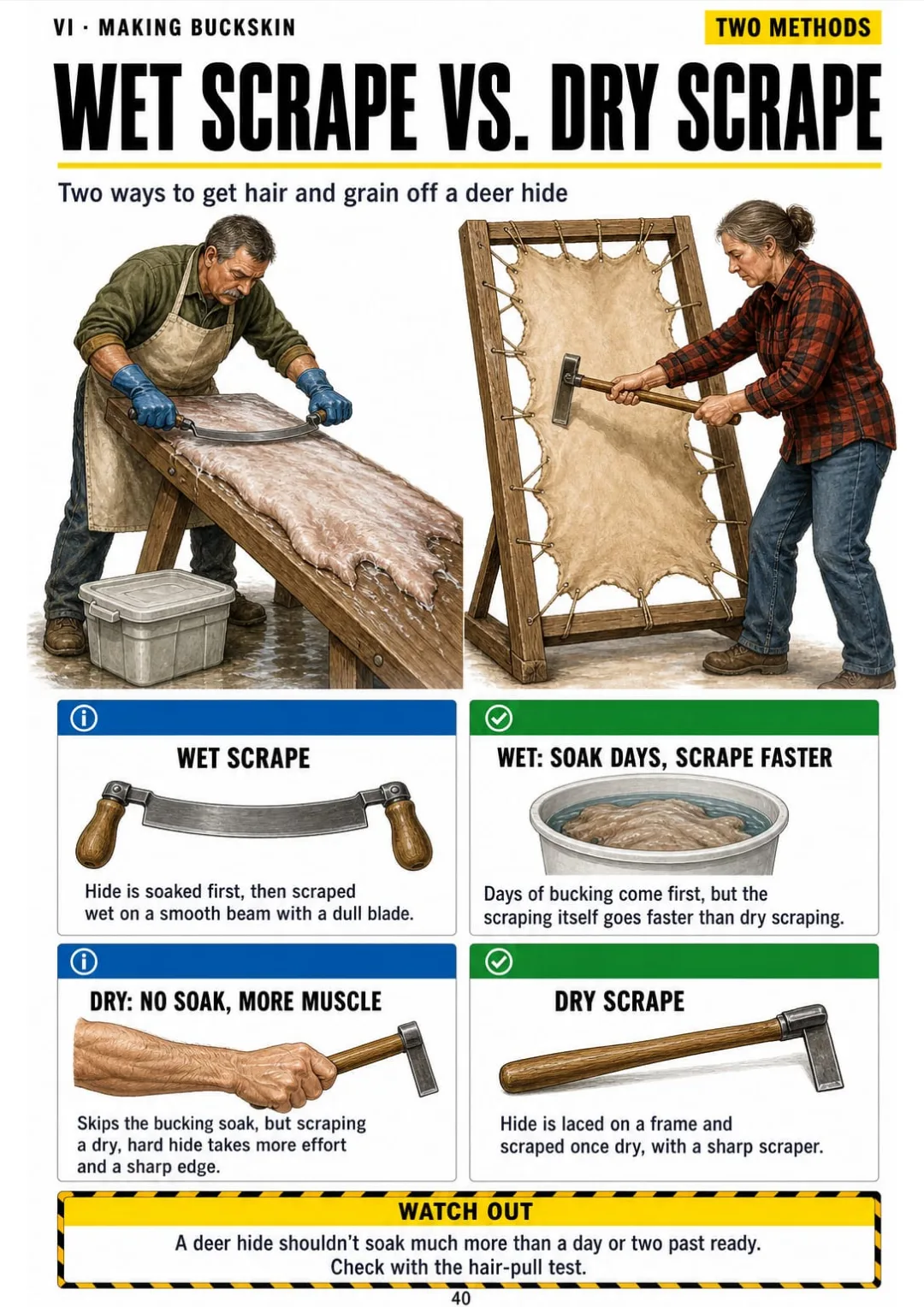
Wet scrape on the beam vs. dry scrape on the frame, side by side
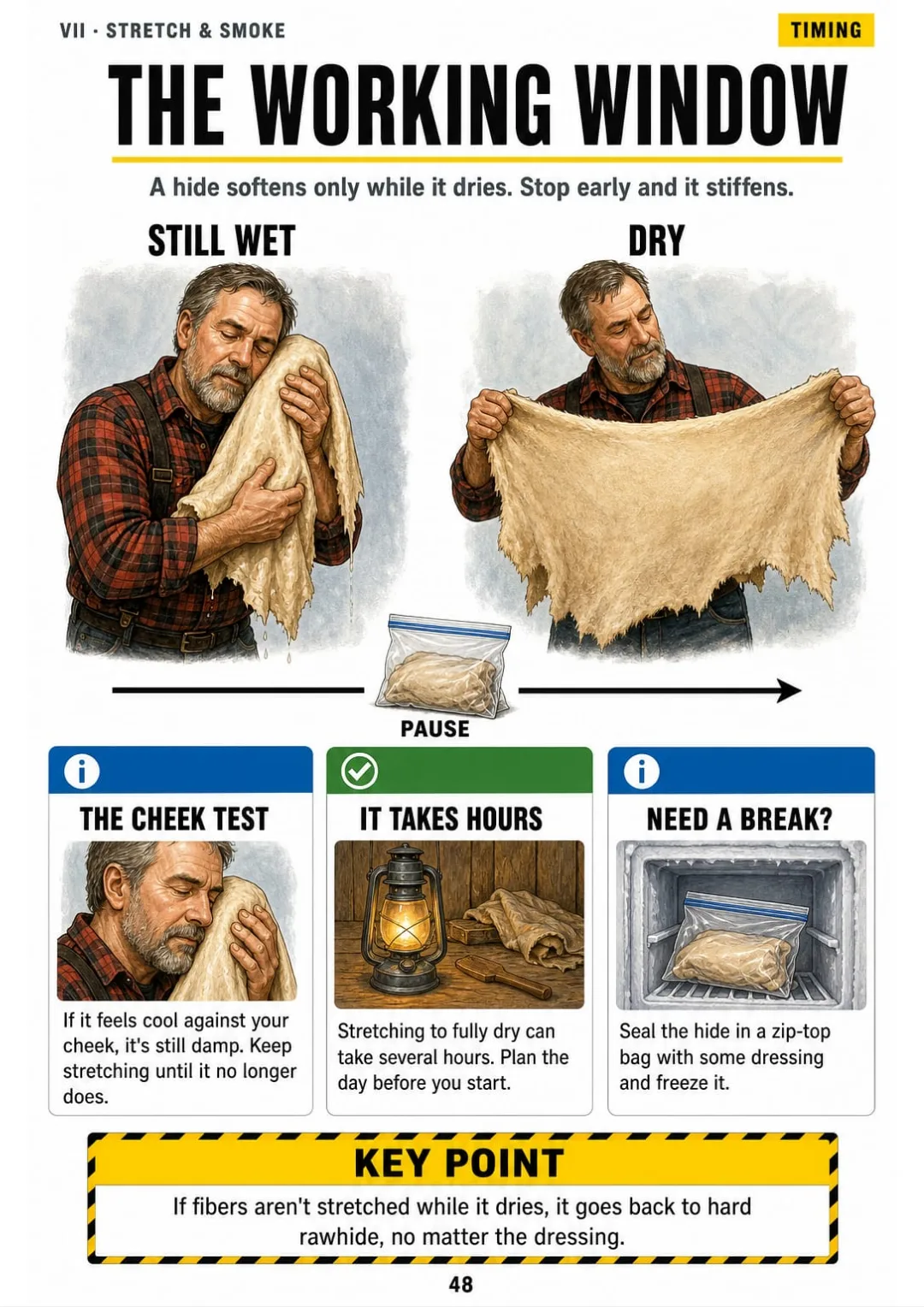
Cool to the touch = still wet: keep stretching until it's fully dry.
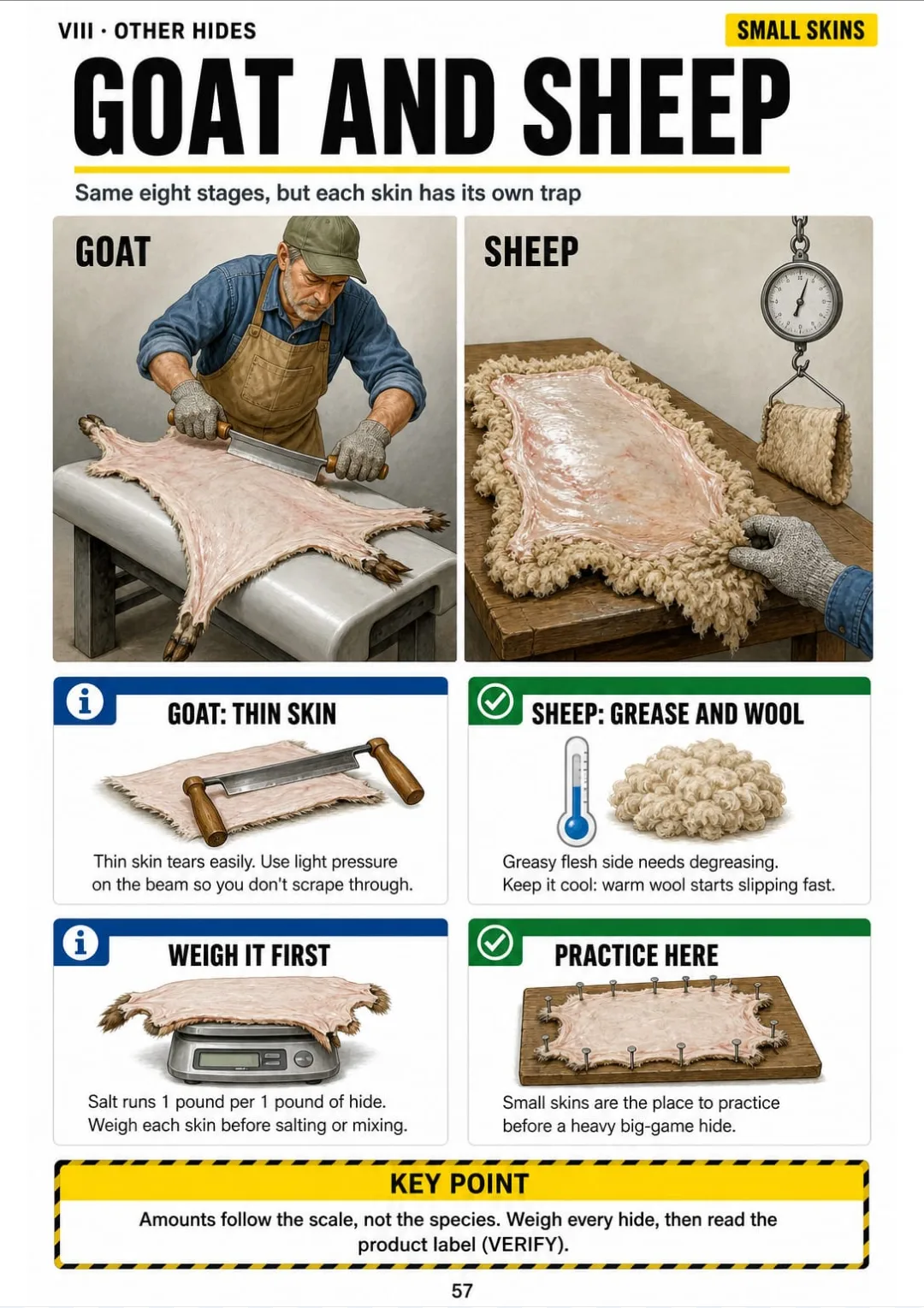
Goat vs. sheep: thin skin, greasy skin, and 1 lb of salt per 1 lb of hide

Swipe to see more →

These are real pages from the book. The table of contents is the full one: 9 parts and 62 topics.

The Problem Isn't You. It's How It Was Explained to You.

Your buck is skinned and the hide is cooling in the truck bed. You're standing in the store aisle looking at five kinds of salt. Table, kosher, rock, pickling, softener pellets.

The guide you saved spends three paragraphs on iodine, grain size and moisture. The answer is in there somewhere, but you can't dig it out standing in an aisle.

Non-iodized, dry, granulated salt: the bag to buy before the hunt

In the book, that same salt is one page. The bag to buy is drawn big: non-iodized, dry, granulated, with one short line on why it matters before the hunt.

Same with the rest: how much salt by hide weight, the fleshing beam, the pickle, the working window, the smoke sleeve. Each one gets its own page.

You buy the right bag before opening day, salt the hide that night, and you don't have to go back to the videos to check.

COMPARE FOR YOURSELF

The Same Topic, Two Ways to Learn It

THIS
  • The manual: line after line
  • Skinning and cooling explained only in words
  • You get to the hide still unsure
Hide quality is determined in large part during the interval immediately following the kill, as bacterial activity begins at once and accelerates with ambient temperature. It is therefore recommended that skinning be performed while the carcass retains body heat, since the hide separates more readily from the underlying tissue at that stage. The carcass should subsequently be brought to approximately 40°F within twenty-four hours; where ambient temperatures exceed 50°F, the allowable interval prior to cooling is reduced to roughly three to four hours, beyond which hair slip may occur.
FOR THIS
  • The cooling clock in one drawing
  • The temperatures and hours in a box
  • You see it and you get it
Skin it warm · carcass to 40°F within 24 h · above 50°F, 3–4 h
CONTENTS

Take a Look at the 9 Parts and 62 Topics

The map, skinning, salting, fleshing, tanning hair-on, making buckskin, stretching and smoking, other hides and troubleshooting: 66 pages, all illustrated.

IThe Map Before the Knife · pp. 5-10
  1. Eight Stages, One Order
  2. Hair-On vs. Buckskin, Side by Side
  3. What a Hide Is Made Of
  4. Rawhide vs. Tanned Leather
  5. Tools You Probably Already Have
  6. Rules and Safety First (VERIFY)
IISkinning and the First Hours · pp. 11-18
  1. The Clock Starts at the Kill
  2. The Four Cuts
  3. Open Skinning vs. Case Skinning
  4. Pull, Don't Cut
  5. Neck and Head: Where to Stop
  6. Cool It Down Fast
  7. Rinse Blood and Dirt
  8. Can't Work It Now? Freeze It Right
IIISalting and Drying · pp. 19-24
  1. The Right Salt
  2. How Much Salt: Weigh the Hide
  3. Rub It Into Every Edge
  4. Drain, Shake, Resalt
  5. Storing a Dry-Salted Hide
  6. Rehydrating Before You Work It
IVFleshing and Thinning · pp. 25-31
  1. Setting Up the Fleshing Beam
  2. Tool Angle and Direction
  3. Fat, Meat, Membrane: Three Things to Take Off
  4. Thick Spots: Neck and Rump
  5. Nicks and Holes
  6. Greasy Spots
  7. Fleshing Hair-On vs. Buckskin
VTanning a Hair-On Hide · pp. 32-39
  1. Picking Your Tanning Method
  2. What the Pickle Does
  3. Mixing by Weight and Volume
  4. Pickle Time, Stirring and Temperature
  5. Shaving After the Pickle
  6. Neutralizing
  7. Brush-On vs. Soak Tan
  8. Oiling Before It Dries
VIMaking Buckskin · pp. 40-47
  1. Wet Scrape vs. Dry Scrape
  2. Bucking: Ash Lye or Hydrated Lime
  3. The Hair-Pull Test
  4. Scraping Off All the Grain
  5. Rinse Out the Bucking
  6. Membrane Off the Flesh Side
  7. Dressing: Brains or Egg Yolks
  8. Wringing: Dress, Wring, Repeat
VIIStretching, Softening and Smoking · pp. 48-56
  1. The Working Window
  2. Lacing the Stretching Frame
  3. The Push Stick
  4. Cable or Rope Softening
  5. Fixing Stiff Spots
  6. Why Buckskin Gets Smoked
  7. Building the Smoke Sleeve
  8. Smoke Color and Time
  9. Finishing a Hair-On Hide
VIIIOther Hides, Storage and Use · pp. 57-60
  1. Goat and Sheep
  2. Elk and Moose
  3. Storing Finished Hides
  4. Sewing Buckskin
IXTroubleshooting and Season Checklist · pp. 61-66
  1. Hair Slip: Spot It, Stop It
  2. Board-Stiff Hide
  3. Grease Burn and Rot
  4. Frequent Mistakes, Before and After
  5. The Season Checklist
  6. A Filled-Out Tanning Log

One Page, One Topic, All Clear

Think of it this way:

Opening weekend, warm afternoon. Your deer is down and it's 55°F out. How long do you have before that hide starts to slip?

In the book, you turn to the clock page. Skin it warm, get the carcass to 40°F within 24 hours, and above 50°F you only have three to four hours, all drawn on one timeline.

Alum gives a white hide that isn't wash-fast; kit tans hold up better

Same with the rest: the four skinning cuts, salt by hide weight, the hair-pull test, the push stick, smoke color and time. Each one on its own page.

Hide Tanning Illustrated is 9 parts and 62 topics, all drawn, and it ends with troubleshooting pages, common mistakes in before-and-after drawings, a season checklist and a filled-out tanning log.

What you see drawn, you don't have to memorize.

What's Inside Hide Tanning Illustrated:

Ipp. 5-10

The Map Before the Knife

The eight stages in one order, hair-on vs. buckskin side by side, what a hide is made of, rawhide vs. leather, the tools you already have and safety first.

IIpp. 11-18

Skinning and the First Hours

Why the clock starts at the kill, the four cuts, open vs. case skinning, pulling instead of cutting, where to stop at the neck, cooling, rinsing and freezing right.

IIIpp. 19-24

Salting and Drying

The right salt, how much by hide weight, rubbing it into every edge, draining and resalting, storing a dry-salted hide and rehydrating it.

IVpp. 25-31

Fleshing and Thinning

Setting up the fleshing beam, tool angle and direction, fat, meat and membrane, thick neck and rump, nicks, greasy spots and hair-on vs. buckskin fleshing.

Vpp. 32-39

Tanning a Hair-On Hide

Picking a method, what the pickle does, mixing by weight and volume, pickle time and temperature, shaving, neutralizing, brush-on vs. soak and oiling.

VIpp. 40-47

Making Buckskin

Wet vs. dry scrape, bucking with ash lye or hydrated lime, the hair-pull test, taking off the grain, rinsing, membrane, dressing with brains or yolks and wringing.

VIIpp. 48-56

Stretching, Softening and Smoking

The working window, lacing the frame, the push stick, cable softening, stiff spots, why buckskin gets smoked, the smoke sleeve, smoke color and time, finishing hair-on.

VIIIpp. 57-60

Other Hides, Storage and Use

Goat and sheep, elk and moose, storing finished hides and sewing buckskin.

IXpp. 61-66

Troubleshooting and Season Checklist

Hair slip, board-stiff hides, grease burn and rot, common mistakes in before-and-after drawings, the season checklist and a filled-out tanning log.

At the end of the book: Common mistakes in before-and-after drawings, a season checklist and a filled-out tanning log.
Plus: 2 Free Books

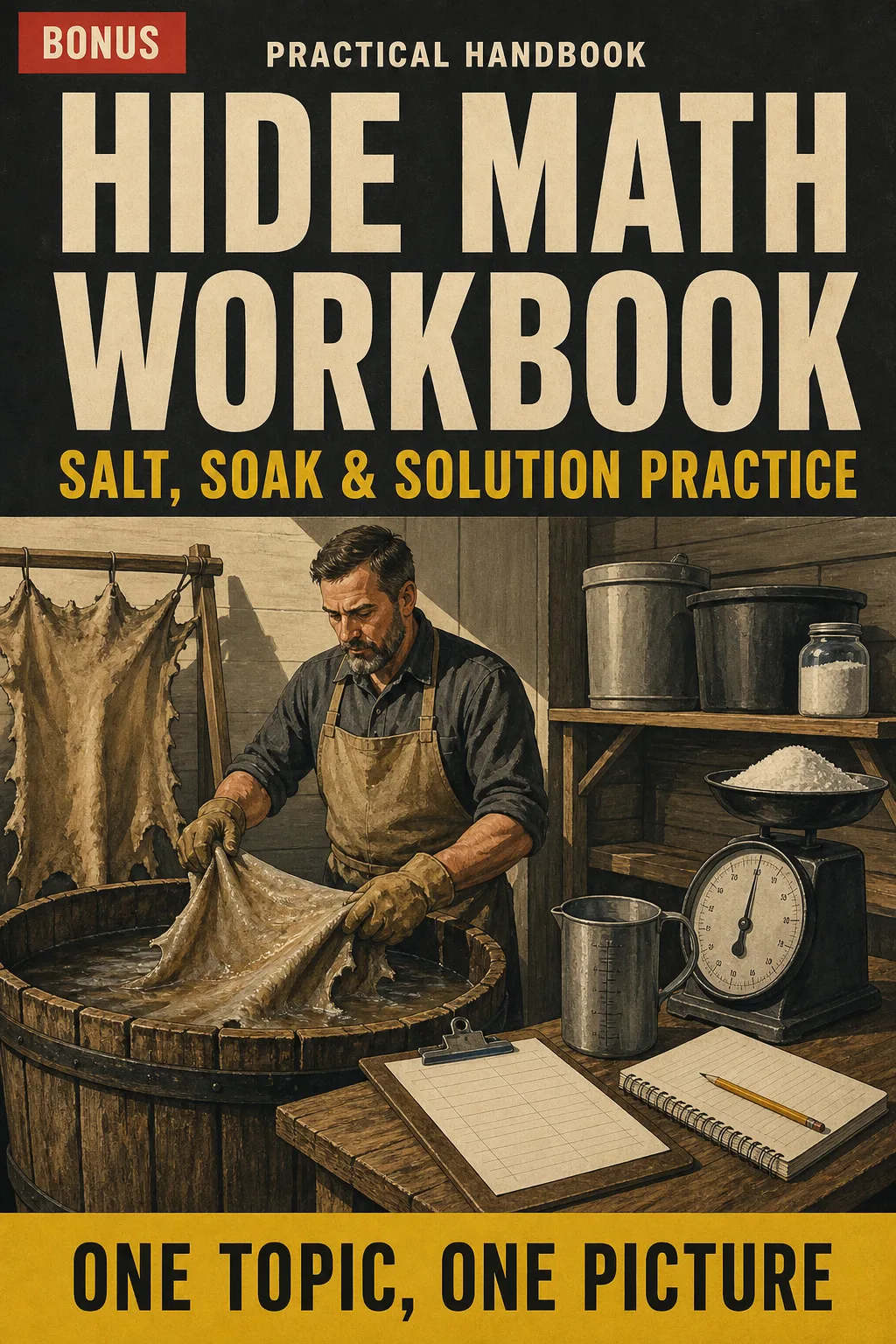
Hide Math Workbook: Salt, Soak & Solution Practice

BONUS 1: «Hide Math Workbook: Salt, Soak & Solution Practice»

Value on its own: US$ 17.90

Worked practice problems with answers: salt per pound of hide, soak times and mixing a solution by weight and volume, so you get the numbers right before the hide is on the beam.

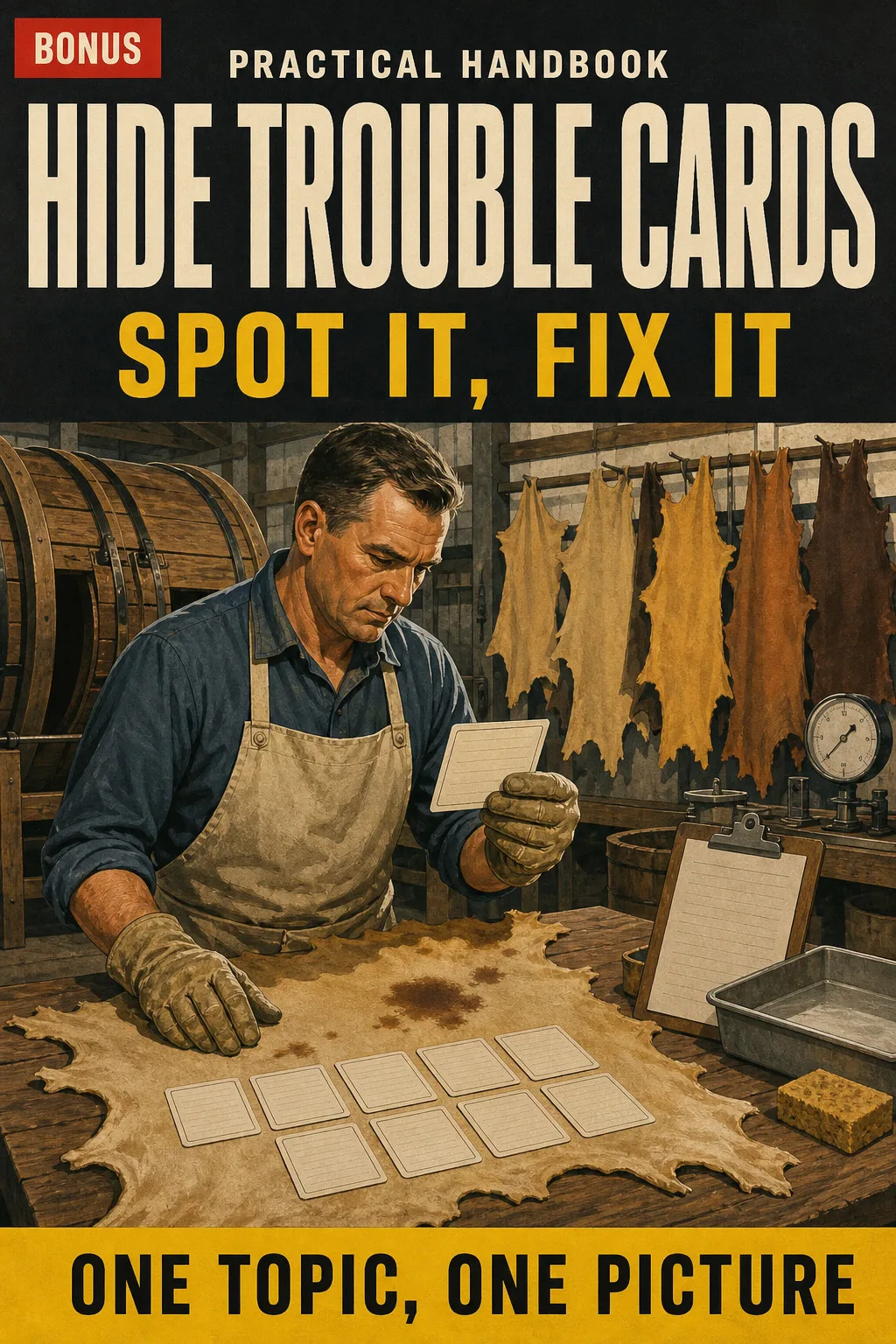
Hide Trouble Cards: Spot It, Fix It

BONUS 2: «Hide Trouble Cards: Spot It, Fix It»

Value on its own: US$ 14.90

Printable quick cards for hair slip, stiff spots, grease burn and rot: what each one looks like and what to do next, ready to keep in the shop.

Hide Tanning Illustrated with 2 Free Books

  • Hide Tanning Illustrated: 66 illustrated pagesUS$ 63
  • BONUS 1: Hide Math Workbook: Salt, Soak & Solution PracticeUS$ 17.90
  • BONUS 2: Hide Trouble Cards: Spot It, Fix ItUS$ 14.90
  • High-resolution PDF to printIncluded
Total value US$ 95.80
YOUR PRICE:
US$ 27
You save US$ 68.80
YES, I WANT HIDE TANNING ILLUSTRATED FOR US$ 27

📄 This is a digital PDF book sent to your email: nothing is printed or shipped.

Secure purchaseEncrypted payment30-day guarantee

PDF by email: We email you Hide Tanning Illustrated as a PDF, together with the two free books. It's a single payment: no installments, no extra charges.

Who This Book Is For

Your last hide dried stiff or lost its hair

Your last hide dried stiff or lost its hair

You open the troubleshooting pages for hair slip and board-stiff hides, see where it went wrong, then follow the eight stages in order on the next one.

The hide is in the freezer right now

The hide is in the freezer right now

You open the page for the stage you're at: how to thaw and rehydrate it, how much salt, when to put it on the beam.

You already process your own animals

You already process your own animals

You've done the butchering for years. The book fills in the hide part, with the numbers in pounds, gallons and °F, for deer, goat, sheep or elk.

Everything You Get Today

US$ 95.80US$ 27
YES, I WANT HIDE TANNING ILLUSTRATED FOR US$ 27

📄 This is a digital PDF book sent to your email: nothing is printed or shipped.

30DAYS
GUARANTEE

30-Day Guarantee

Try Hide Tanning Illustrated for 30 days, bonus books included.

We refund everything if the file won't open, if the book isn't what you see here, if you were charged twice or if the email doesn't arrive. Just email us.

You pay once. No subscriptions.

Frequently Asked Questions

Is it for me if I tried once and the hide came out stiff or lost its hair?

Yes. The book follows the same eight stages in order and has troubleshooting pages for hair slip, board-stiff hides and grease burn, so you can see where it went wrong. It also works if this is your first hide.

Where does the content come from?

From standard home tanning methods, hair-on and buckskin. Anything that depends on rules is checked against your state wildlife agency's regulations, the product label and Safety Data Sheet, and local burn ordinances, and is marked VERIFY.

Is this official material?

No. It's an independent illustrated guide, not issued or endorsed by any agency or manufacturer. It's made to have at hand while you work and doesn't replace hands-on instruction, your state's rules or product labels.

Is it only for deer, or does it work for goat, sheep or elk?

The whole method is drawn on deer, whitetail or mule deer. Part 8 has its own pages for goat and sheep and for elk and moose, with what changes: skin thickness, grease and how much salt.

Do I need to buy expensive tools or chemicals?

Not necessarily. The book starts with the tools you probably already have, and the fleshing beam is drawn from a PVC pipe on a wooden triangle. For the tan itself it compares a kit tan, alum-salt and brain tan with brains or egg yolks side by side, so you choose the method and what you buy before you spend anything.

When and how do I get it?

As a PDF by email, at the address you enter at checkout. The 2 bonus books come the same way.

Do I have to pay every month?

No. It's a one-time payment.

Can I have it on paper?

Yes. It's a PDF you can print at home or at a print shop and keep in the shop or the shed.

How does the refund work?

You have 30 days. We refund everything if the file won't open, if the book isn't what you see on this page, if you were charged twice or if the email doesn't arrive: just email us.

Before You Close This Page

No more rewatching videos that disagree.

The salt, the beam and the frame: you see them drawn, and that's it.

You get to the next hide knowing where every step is.

Drawings make studying faster.

The book is right below.

One-time payment: US$ 27 · Guarantee: 30 days · PDF by email

YES, I WANT HIDE TANNING ILLUSTRATED FOR US$ 27

📄 This is a digital PDF book sent to your email: nothing is printed or shipped.